
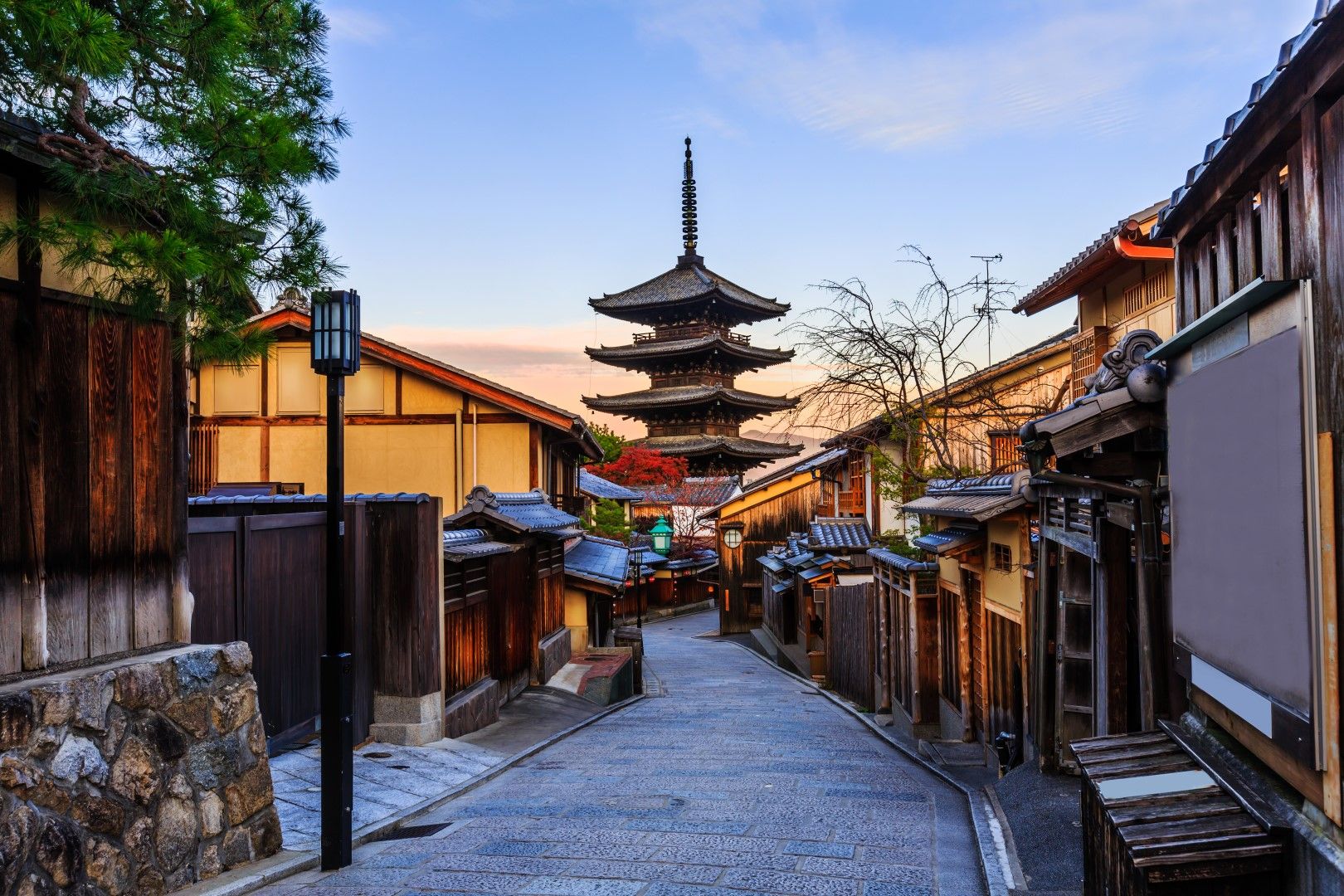
There are cities you visit, and there are cities you step into — and Kyoto belongs firmly to the second kind. Walk down a lantern-lit lane in the early evening, past dark wooden townhouses with paper windows glowing warm, and it feels less like sightseeing and more like time travel. For more than a thousand years, from 794 until 1868, Kyoto was the imperial capital of Japan, and the old capital kept what so many other cities lost: its temples, its tea houses, its crafts, and its unhurried way of life.
Seventeen of Kyoto's historic monuments — temples, shrines and a castle — were inscribed together on the UNESCO World Heritage List in 1994, but the city's real magic is not found on any list. It is found on foot: in the hush of a bamboo grove at dawn, in the scent of incense drifting from a temple hall, in the clatter of a wooden sandal on a stone lane.
Kyoto rewards the slow traveller. The great sights are spread across the city's hills and river valleys, connected by lanes that were made for walking. Kiyomizu-dera, founded in 778, stands on a hillside above the eastern districts, its great wooden stage jutting out over a slope of maple trees. Below it, the preserved lanes of Sannenzaka and Ninenzaka slope gently downhill, lined with machiya townhouses that now hold tea shops, pottery studios and sweet makers. At the southern edge of the city, Fushimi Inari-taisha draws visitors up a mountainside trail through thousands of vermilion torii gates, each one donated by a worshipper or a business hoping for good fortune. In the north, Kinkaku-ji — the Golden Pavilion — rises above a still pond, its top floors covered in gold leaf. And in the west, the bamboo grove of Arashiyama sways above the path, tall green stalks creaking softly in the wind.

But Kyoto is also a living city, not a museum. In Gion, the city's most famous geisha district, tea houses still operate behind discreet wooden facades, and in the early evening you may glimpse a maiko — an apprentice geiko — hurrying along Hanamikoji Street to an appointment, her kimono bright against the dark wood. In the covered arcades of Nishiki Market, nicknamed "Kyoto's Kitchen", vendors have sold pickles, tofu, matcha sweets and fresh seafood for generations. And in the city's many small restaurants, the refined multi-course cuisine known as kaiseki turns the seasons themselves into a meal.

Highlights of a Kyoto visit:
- Kiyomizu-dera and the stone lanes of Sannenzaka and Ninenzaka below it
- Fushimi Inari-taisha and its mountain trail of thousands of vermilion torii gates
- Gion and Hanamikoji Street in the early evening, when the lanterns come on
- Kinkaku-ji, the Golden Pavilion, reflected in its mirror pond
- The Arashiyama Bamboo Grove and the Togetsukyo Bridge over the Katsura River
- Nishiki Market, "Kyoto's Kitchen", for a taste of the city's everyday flavours
A few notes for the road: start early — the famous sights are at their quietest and most beautiful in the first hours of the day. Wear comfortable shoes, because Kyoto is best explored on foot, and its lanes are made of stone. Be a respectful guest in Gion: keep your voice low, do not photograph people without permission, and note that photography is restricted on some private lanes. Many temples and shrines are open grounds you can wander freely, so let yourself drift — Kyoto's greatest discoveries are often the small shrine or garden you were not looking for.
Kyoto does not shout. It whispers — through temple bells, through rustling bamboo, through the soft light of a paper lantern. Give it a few unhurried days, and it will stay with you long after you leave.
WolfKing Walk — Discover Every Story. Follow our 4K walking tours on YouTube: https://www.youtube.com/@wolfkingwalk. Visit our website: https://wkwtv.com

Subscribe to:
Post Comments (Atom)


No comments:
Post a Comment