
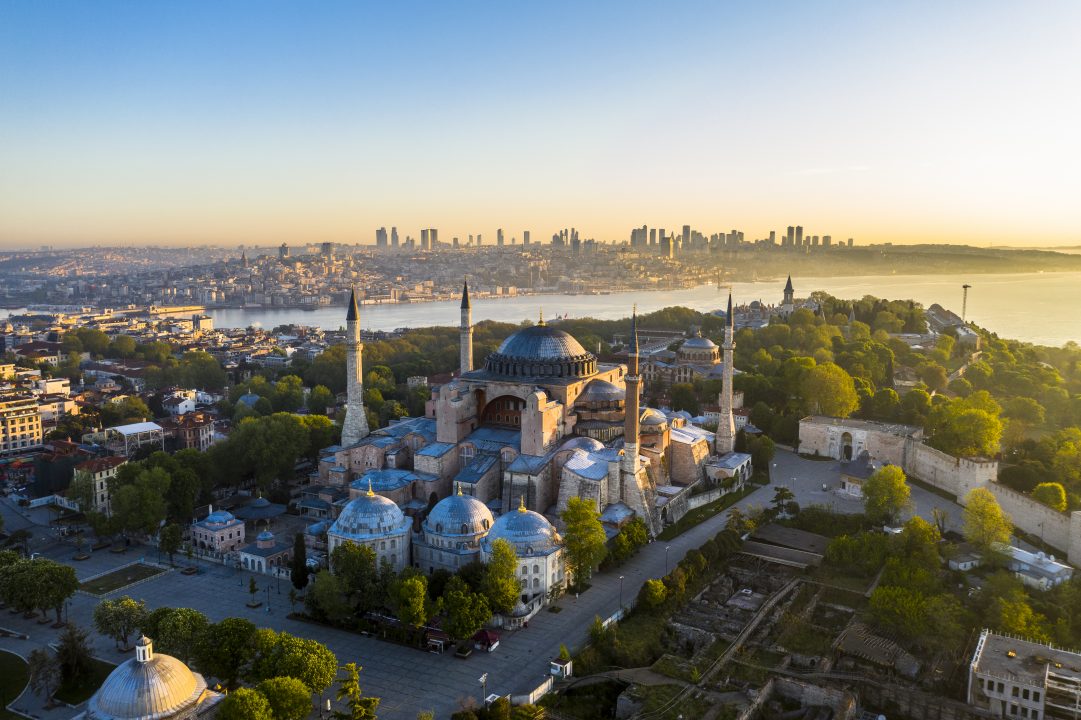
Few cities on Earth ask you to stand in two places at once. In Istanbul, the Bosphorus does the asking for you. Ferries glide between Europe and Asia every few minutes, minarets and church domes share the same skyline, and a walk through the old city can pass a 1,500-year-old basilica, a 500-year-old covered market, and a tram line that still rattles along its tracks — all before lunch. Three days is not enough to finish Istanbul. It is, however, exactly enough to fall for it.
The city wears its history in layers. Founded as Byzantion by Greek settlers around the 7th century BC, it became Constantinople under the Romans, the glittering capital of the Byzantine Empire for a thousand years, and then the Ottoman capital from 1453 until the early 20th century. Today it is Türkiye's largest city — a megacity of over 15 million people — and one of the most visited destinations in the world. The Sultanahmet historic district, home to its greatest monuments, is a UNESCO World Heritage Site.
Day 1 — The Old City: Empires in Stone
Start where Istanbul begins. Hagia Sophia, the great church of the Byzantine Empire completed in 537 AD under Emperor Justinian, stood for nearly a millennium as the largest cathedral in the world. Later a mosque under the Ottomans, later a museum, and since 2020 a working mosque again, its massive dome still floats impossibly above a sea of marble. Across the square stands the Blue Mosque, built between 1609 and 1616 under Sultan Ahmed I, its six minarets and cascade of domes defining the postcard skyline. Between them, the ancient Hippodrome survives as Sultanahmet Square, still holding the Egyptian Obelisk and the Serpent Column. Finish the day underground at the Basilica Cistern, the vast 6th-century water reservoir whose 336 marble columns rise out of shallow, lamp-lit water.
Day 2 — Markets, Palaces and the Bosphorus
No visit is complete without the Grand Bazaar, one of the oldest covered markets in the world, operating since the mid-15th century with more than 60 streets and thousands of shops under its vaulted roofs. Nearby, the Spice Bazaar fills the air with saffron, dried fruit, and Turkish delight. Then cross to Topkapi Palace, the Ottoman sultans' residence for nearly 400 years, where the treasury, the imperial kitchens, and the Harem apartments overlook the Golden Horn. In the afternoon, take a public ferry up the Bosphorus — the city's cheapest and loveliest cruise — passing waterside mansions, fortresses, and fishing boats, and step off on the Asian side at Üsküdar or Kadıköy for tea by the water.
Day 3 — The Living City
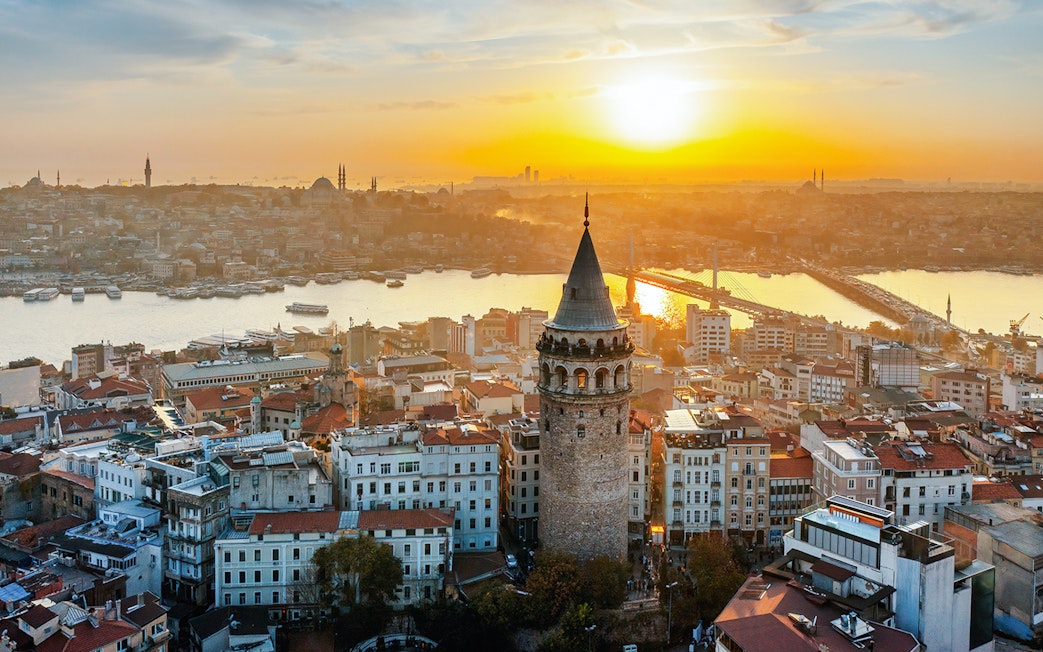
Cross the Galata Bridge, where lines of fishermen work the railings all day, and climb up to the Galata Tower, a 14th-century Genoese watchtower with a 360-degree panorama over both continents. Wander İstiklal Avenue, the city's grand pedestrian boulevard, lined with 19th-century arcades, cinemas, and consulates, and ride the nostalgic red tram that has run it for generations. End in Kadıköy on the Asian side, where locals crowd the fish market, the meyhanes, and the lively Moda waterfront at sunset.

Highlights of an Istanbul visit
- Hagia Sophia (completed 537 AD) — the dome that defined a thousand years of architecture.
- The Blue Mosque (1609–1616) — six minarets, 20,000 handmade ceramic tiles.
- Topkapi Palace — 400 years of Ottoman imperial life, with views over three waterways.
- The Grand Bazaar — one of the world's oldest covered markets, in business since the 1400s.
- The Galata Tower — a 14th-century Genoese tower and the city's best viewpoint.
- A Bosphorus ferry ride — the ride between two continents, and the best value in the city.
Visiting notes
The old city monuments are best approached on foot, early in the day — queues build by late morning. Wear modest clothing and bring a scarf if you plan to enter active mosques, as they close to visitors during prayer times. Public transport is excellent: trams, metros, and ferries all run on a single rechargeable transit card. Spring and autumn offer the most pleasant walking weather. Keep small change for street tea vendors, and always leave room for one more ferry ride — the crossing never gets old.
WolfKing Walk — Discover Every Story. Follow our 4K walking tours on YouTube: https://www.youtube.com/@wolfkingwalk. Visit our website: https://wkwtv.com

Subscribe to:
Post Comments (Atom)


No comments:
Post a Comment