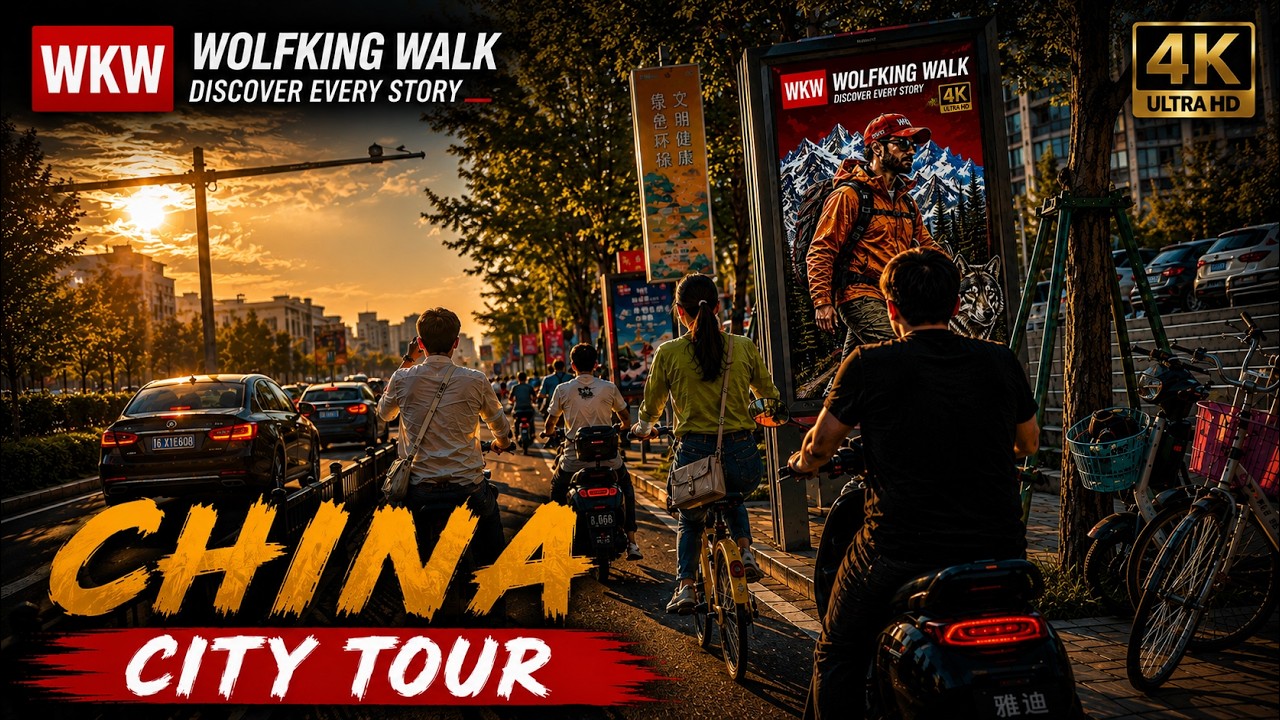
There is a particular hour in a modern Chinese city when the streets seem to hum. The neon is still off, the delivery scooters have thinned, and office towers catch the last of the daylight on their glass faces. Then the lights come on — floor by floor, sign by sign — and the city changes its costume. This is the hour WolfKing Walk loves most: the moment a metropolis of millions exhales and shows you its evening face.
China's modern cities are often described in numbers — population, skylines, kilometers of metro — but numbers miss the texture. Walk them and you feel it instead: the warmth rising from a night-market grill, the slap of mahjong tiles through an open window, the sudden quiet of a pocket park wedged between two towers. A 4K walking tour doesn't just show you a city; it lets you stand inside its rhythm for a while.
The Vertical City
The first thing that strikes you is the verticality. Residential towers rise thirty, forty, fifty stories, laundry strung like festival banners from the balconies. Below them, the street level is a different country entirely: fruit stalls, phone-repair kiosks, barbershops with a single chair and a waiting bench. The city stacks its lives on top of each other, and the elevator ride from a penthouse to a noodle shop takes less than a minute.
Streets That Never Fully Sleep
By day, the commercial streets move with purpose — commuters, couriers, grandparents walking toddlers in the shade of plane trees. By night, the same streets loosen up. Food streets ignite: skewers over charcoal, hand-pulled noodles slapped against the counter, stinky tofu daring you to try it. The Chinese night market is not a tourist attraction; it is where the city actually eats, and the plastic stools are always full.
Old Bones, New Skin
What makes these cities fascinating on foot is the collision. A Ming-era city wall runs alongside a six-lane road. A temple courtyard, incense still burning, sits in the shadow of a shopping mall. The old neighborhoods — the hutongs of the north, the lilong lanes of Shanghai, the arcade streets of the south — are being renovated, demolished, and mourned in real time. Walk them now; the map changes every year.
Why Walk It in 4K
A walking tour in 4K is the closest thing to being there without the plane ticket. You notice the details a highlight reel skips: the way the light falls between the towers at 6 p.m., the sound of a street sweeper's bamboo broom, the exact shade of a neon sign reflected in wet pavement. WolfKing Walk films these cities at walking pace — no rush, no narration over the moment — so you can discover every story the street is telling.
Highlights of a modern Chinese city walk
- The evening light-up — towers and bridges switching on at dusk.
- Night food streets — skewers, noodles, and plastic-stool dining.
- Old lanes beside new towers — the city's past and future in one frame.
- Riverside promenades — the skyline at its most cinematic.
- Metro stations as architecture — some are underground palaces.
Visiting notes
China's big cities are walkable, safe at night, and stitched together by some of the world's best metro systems — buy a transit card and ride like a local. Cash is nearly extinct; mobile payment rules, so set that up before you go. Learn ten words of Mandarin and use them badly; the smiles are worth it. And walk in the early evening, when the heat breaks and the city puts on its lights.
WolfKing Walk — Discover Every Story. Follow our 4K walking tours on YouTube: https://www.youtube.com/@wolfkingwalk. Visit our website: https://wkwtv.com


No comments:
Post a Comment